


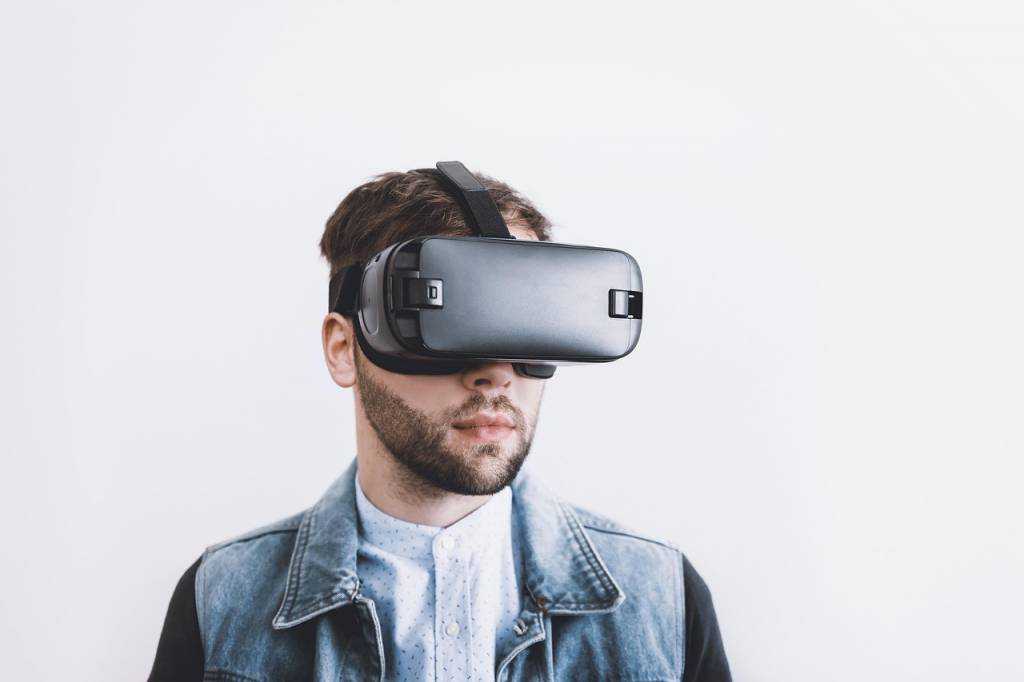
Virtual and extended reality are no longer peripheral experiments in industrial innovation. In aerospace, space, defense and energy, immersive technologies are rapidly becoming central to how manufacturing is designed, validated and operated. At the heart of this shift, Skyreal is positioning itself as one of the most ambitious players in the market, with a VR CAD software platform built specifically for large-scale, highly complex engineering programs.
Rather than treating VR as a visualization gimmick, Skyreal’s proposition is to make immersive environments a native extension of existing CAD and PLM workflows. For manufacturers wrestling with dense 3D assemblies, tight tolerances, demanding safety requirements and high program risk, this is a significant change of paradigm: production is no longer planned on 2D documents and static screens, but inside full-scale, navigable digital factories.
From traditional CAD to immersive manufacturing environments
For decades, industrial companies have relied on powerful CAD systems to model products and, more recently, to plan manufacturing. These tools are excellent for design and engineering, but they reach their limits when teams need to understand how a product will actually be built, maintained and operated in real-world conditions.
On a 2D monitor, it is difficult to grasp spatial constraints, operator ergonomics, tool access, and safety zones around complex equipment. Physical mockups and pilot lines were traditionally used to close this gap, but they are expensive, time-consuming and inflexible. Any late change can trigger cascading delays and additional costs.
VR and XR manufacturing solutions respond to this challenge by bringing engineering data into full-scale virtual environments. Skyreal’s approach is to take native CAD models and transform them into interactive scenes, in which manufacturing experts, engineers, safety officers and operations teams can walk, manipulate, measure and simulate processes together—before anything is built physically.
In this sense, Skyreal VR acts as a bridge between the rigorous domain of product design and the operational world of manufacturing. Instead of being separate phases, design and manufacturing become two perspectives on the same immersive dataset.
What VR and XR manufacturing solutions really offer
Behind the buzz around “digital transformation”, VR and XR manufacturing platforms provide a very concrete set of capabilities. For industrial firms, these capabilities directly affect how production lines are planned, optimized and commissioned.
At their core, immersive manufacturing solutions enable:
- Real-time visualization of manufacturing layouts, from full assembly lines to individual workstations and tool setups.
- Collaborative planning environments, where engineering, methods, HSE, quality and operations teams share a common, immersive view of the factory.
- Virtual walkthroughs of production facilities, allowing stakeholders to explore upcoming installations at 1:1 scale, long before construction or rework.
- Simulation of manufacturing sequences, including assembly operations, material flows, operator movements and tooling changes.
- Early identification of bottlenecks and hazards, such as congested areas, collision risks, awkward postures or inaccessible components.
- Integration of design and manufacturing data, so that product changes are instantly reflected in the virtual production environment.
- Drastic reduction of physical mockups and prototypes, by replacing them with high-fidelity immersive visualizations.
- Training capabilities for new manufacturing processes, tools and safety procedures, using realistic virtual scenarios.
This is where a dedicated industrial platform like Skyreal distinguishes itself from generic VR solutions. It is engineered to handle large-scale, often classified CAD models, connect with existing engineering tools, and support complex collaborative use cases with traceability.
How Skyreal VR is reshaping industrial validation
Developed by French technology company Skyreal, the Skyreal VR platform has been built around one core idea: turning static CAD data into a dynamic, immersive engineering environment. Rather than exporting simplified models for one-off demos, manufacturers can create “living” digital twins of their products and plants, continuously updated as designs evolve.
From a technical perspective, the platform focuses on three critical dimensions for manufacturing organizations:
- Scalable CAD-to-VR pipelines, capable of ingesting large assemblies from leading CAD and PLM systems while preserving structure, metadata and key tolerances.
- Enterprise-grade deployment, including support for on-premise infrastructures, IT security requirements and integration within existing engineering toolchains.
- Collaborative multi-user sessions, where geographically distributed teams can join the same immersive environment, annotate, measure and review designs in real time.
According to the company’s positioning, this is less about flashy headsets and more about integrating VR as a standard engineering tool. Skyreal’s teams provide technical consultation, IT infrastructure assessment and integration planning, enabling organizations to run evaluation programs and progressively embed VR within existing workflows.
By doing so, the platform aims to accelerate design validation, de-risk manufacturing planning and support operational readiness across the entire product lifecycle.
Use cases in aerospace, space, defense and energy
The real impact of immersive manufacturing solutions becomes visible when looking at specific industrial contexts. The sectors Skyreal primarily targets—aircraft, spacecraft, defense systems and energy infrastructure—share a common characteristic: they deal with complex, high-value assets where errors in manufacturing planning are costly and sometimes dangerous.
In aerospace, VR and XR tools are increasingly used to:
- Optimize aircraft assembly lines and workstations, testing different layouts and flows virtually.
- Validate complex manufacturing sequences for fuselage, wings, cabins or engines before physical implementation.
- Visualize equipment placement, tooling access and ergonomics for operators and maintenance crews.
- Train technicians on assembly procedures in realistic yet safe virtual environments.
In the space industry, manufacturers and integrators can leverage immersive environments to:
- Plan satellite and spacecraft assembly and integration operations inside clean rooms and specific facilities.
- Simulate assembly and maintenance sequences in constrained or zero-gravity contexts.
- Optimize production workflows when dealing with small series and highly customized systems.
Defense programs, which often combine stringent confidentiality with complex industrial setups, benefit from:
- Secure virtual design of manufacturing facilities, weapon system assembly lines and logistics areas.
- Visualization of production workflows for classified projects within controlled digital environments.
- Scenario-based training for operators and technicians on critical equipment, without exposing sensitive assets.
In the energy sector—especially offshore, nuclear, and large-scale infrastructure—VR and XR are increasingly used to:
- Optimize the construction and pre-assembly of offshore platforms and large modules.
- Plan pipe routing, cable trays and installation sequences in congested environments.
- Visualize facility assembly and commissioning procedures in immersive 3D.
- Train maintenance teams on inspection and intervention procedures in hazardous or remote locations.
Across all these sectors, the common thread is the ability to explore “what if?” scenarios in a safe, cost-effective way, long before any irreversible decision is taken in the real world.
Why immersive manufacturing is becoming a strategic necessity
The industrial argument for VR and XR manufacturing solutions is surprisingly straightforward. Organizations face constant pressure to increase productivity, reduce operational risk and accelerate production timelines. Traditional methods—static layouts, 2D plans, dense PowerPoint reviews and physical prototypes—are simply too slow for today’s competitive environment.
Immersive technologies attack several pain points at once:
- Manufacturing efficiency improves because teams can identify and remove bottlenecks early in the planning phase.
- Safety is enhanced as hazardous situations are visualized and mitigated before real-world operations begin.
- Time-to-production is reduced by avoiding lengthy trial-and-error cycles and late layout changes.
- Operational costs fall as fewer physical mockups, pilot lines and rework cycles are required.
- Team coordination benefits from a shared, intuitive understanding of future facilities and processes.
- Knowledge transfer becomes faster and more effective through immersive training sessions.
- Quality improves because manufacturing and assembly processes are stress-tested early.
- Risk is mitigated by uncovering manufacturability issues well before they reach the shop floor.
Viewed through this lens, VR and XR are less about futuristic hardware and more about hard metrics: fewer design iterations, shorter ramp-up, better first-time-right rates. Manufacturers that deploy such tools at scale report measurable gains, not just incremental optimizations.
It is in this context that platforms such as SKYREAL are gaining traction: they deliver immersive capabilities that are directly aligned with the realities of industrial programs, rather than generic VR experiences.
How Skyreal supports deployment and integration
One of the recurring obstacles to adopting VR in manufacturing is the fear of creating yet another siloed tool, disconnected from core engineering systems. Skyreal addresses this head-on with a deployment model that starts from the enterprise architecture rather than from the headset.
Typically, new customers engage through an evaluation program coordinated with the company’s technical sales and engineering teams. This assessment phase focuses on three main questions: how VR will integrate with the current CAD and PLM stack; what IT infrastructure is required; and which priority use cases will generate value fastest.
Key aspects of this integration strategy include:
- An IT infrastructure assessment to define whether on-premise, private cloud or hybrid deployment best fits security and performance constraints.
- Connectivity with existing CAD systems, ensuring that design data flows into VR with minimal manual intervention.
- Process mapping to embed VR sessions at specific stages of design reviews, manufacturing planning and HSE validation.
- Training of internal champions, so that industrial teams can independently run immersive workshops and analyze their outcomes.
For organizations in regulated industries, this approach is crucial. VR cannot be a stand-alone showcase; it must respect data classification, access rights and traceability requirements. Skyreal’s focus on industrial-grade deployment reflects an understanding that immersive tools need to earn their place in rigorous engineering environments.
From pilot projects to everyday manufacturing practice
Many industrial players have already experimented with VR through isolated pilot projects: a one-off layout review for a new production cell, a digital mockup of a vehicle, or a demonstration for an internal innovation day. While these experiences can be compelling, they often fail to scale because they are treated as side projects.
The real transformation occurs when immersive reviews become a recurring step in the manufacturing process—for example:
- Systematically running VR-based design for manufacturing (DfM) sessions before freezing major design milestones.
- Using immersive environments as a standard tool during industrialization gates and factory acceptance reviews.
- Rolling out VR training modules for each new production line or major equipment upgrade.
Skyreal’s ambition is clearly to support this shift from sporadic pilots to industrial routine. By connecting to CAD systems, providing user-friendly collaboration tools and supporting large, complex environments, the platform is designed to become part of the daily toolkit for manufacturing engineers and planners.
Digital manufacturing and the future of XR
Looking ahead, the boundaries between VR, AR and traditional 3D tools are likely to blur further. As extended reality hardware evolves and becomes more comfortable, lighter and affordable, immersive experiences will integrate more seamlessly into the factory environment.
In such a context, the underlying software platforms will play a decisive role. To remain relevant, VR and XR manufacturing tools will need to:
- Handle increasingly large and complex datasets without compromising performance.
- Integrate in real time with manufacturing execution systems (MES), PLM, and IoT data sources.
- Support a continuum from fully immersive VR to on-site AR overlays and desktop 3D visualization.
- Offer traceability and analytics capabilities, turning immersive sessions into actionable engineering knowledge.
Skyreal’s current positioning—bridging CAD, VR and manufacturing validation—places it squarely in the midst of this evolution. By treating immersive technologies as a fundamental component of digital manufacturing, rather than an add-on, the platform exemplifies how VR and XR can evolve from experimental tools into strategic assets.
For manufacturers in aerospace, space, defense and energy, the message is increasingly clear: immersive manufacturing solutions are not just a technological curiosity. They are becoming a competitive requirement for organizations determined to build faster, better and more safely in an environment where every program delay and quality issue carries a heavy price.