


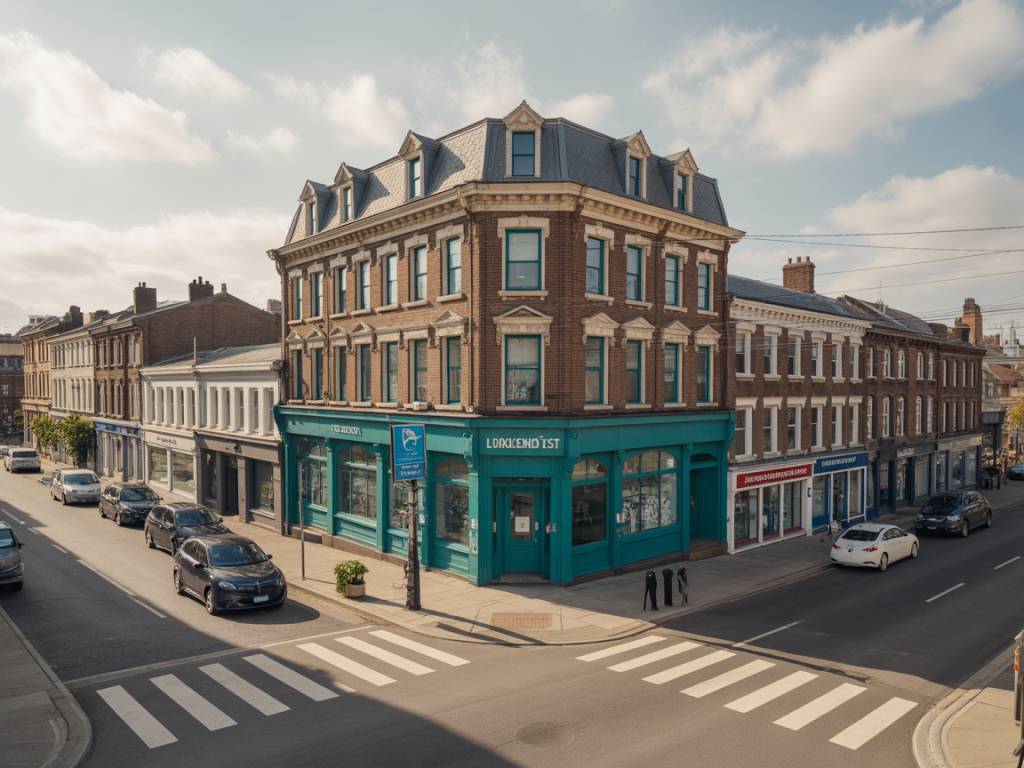
When I first started looking at how small businesses can secure affordable space in high-cost neighborhoods, I kept running into the same problem: traditional banks often see these projects as too risky, too small, or too unconventional. That is exactly where community land trusts, or CLTs, can make a real difference. A community land trust is a nonprofit structure that acquires and holds land for the long term in service of a community mission. While CLTs are often discussed in relation to affordable housing, I believe they can also be powerful vehicles for financing affordable business spaces such as storefronts, workshops, studios, kitchens, and light industrial units.
In practical terms, a CLT can help local entrepreneurs access stable space at below-market rents without relying on conventional bank financing. It does this by separating land ownership from building ownership, using patient capital, and partnering with mission-driven lenders, public agencies, investors, and community members. For neighborhoods facing displacement, this model can preserve local businesses, support job creation, and keep essential services within reach.
What a community land trust is and why it matters for businesses
A CLT is usually a nonprofit organization that acquires land and holds it in perpetuity for public benefit. The trust often leases the land to building owners or users through long-term ground leases, which creates stability while preventing speculative land price increases from driving out local tenants. In housing, this model is used to keep homes affordable over generations. For commercial space, the same logic applies: if land costs are removed from the speculative market, the space itself can remain affordable for small businesses over time.
I think of the CLT model as a way to “de-risk” the land portion of a project. A business owner may still own or lease the building, but the land beneath it is controlled by the trust. That structure can reduce upfront acquisition costs, improve long-term affordability, and make it easier to attract funding from sources that care about community impact rather than maximum profit.
According to the Lincoln Institute of Land Policy, CLTs are increasingly used not only for housing but also for commercial and mixed-use development. In cities where rents have surged by double digits over recent years, the ability to hold land outside the speculative market can be a lifeline for local enterprises.
How CLTs finance affordable business spaces without traditional banks
Traditional banks typically evaluate projects based on collateral, credit history, debt service coverage, and comparables. For affordable commercial projects, those criteria can be a poor fit. Rents are intentionally kept below market, so projected cash flow may look weaker on paper even when the project has strong social value. CLTs work around this by assembling financing from multiple sources and structuring deals for long-term community benefit rather than short-term return.
Here are the most common financing tools I see in CLT-backed commercial projects:
Instead of one large bank loan, a CLT project often uses a layered capital stack. For example, a city might donate land or provide a forgivable loan, a foundation might offer a grant for predevelopment costs, and a CDFI might supply the senior or mezzanine debt. This mixed-finance approach makes projects feasible even when conventional underwriting would reject them.
Why this model works for affordable business space
Affordable business space is hard to create because commercial real estate is usually valued based on the highest possible rent. That dynamic favors chain stores, high-margin tenants, and speculative investors. Local businesses, especially startups and neighborhood-serving enterprises, often cannot compete. I have seen this pattern repeatedly in urban corridors where a bakery, repair shop, childcare center, or artist studio adds enormous social value but generates modest cash flow.
CLTs help solve this mismatch by lowering one of the largest costs in real estate: land. Since the trust retains ownership of the land, the building can be priced or leased more affordably. This can reduce speculative pressure and allow rents to remain stable. In some cases, the CLT also imposes resale restrictions or long-term affordability covenants so the asset continues serving the community.
A useful example is a mixed-use project in which the ground floor includes a grocery cooperative and two small workshops, while the upper floors hold community office space. If the land is owned by a CLT, the project does not have to absorb the full market cost of acquisition. That lower land cost can mean lower rents for tenants and a more resilient business ecosystem.
Real-world examples and lessons from practice
One of the clearest lessons from successful CLT projects is that the model works best when it is locally rooted. In several U.S. cities, CLTs have preserved storefronts for immigrant-owned businesses, artist collectives, and neighborhood service providers. The common pattern is not just affordable rent; it is long-term control and community governance.
For example, in some neighborhoods, CLTs have acquired older commercial buildings that were at risk of conversion into luxury retail. By removing the land from the speculative market, the trust has been able to offer below-market leases to tenants such as daycare providers, local cafés, or repair shops. These tenants often bring stable foot traffic, local jobs, and culturally relevant services that would otherwise disappear.
I also find the cooperative model especially compelling. In a commercial co-op, multiple small businesses can collectively occupy and manage a building, sometimes with the CLT holding the land underneath. This can improve bargaining power and lower operating costs. One case I studied involved a group of food entrepreneurs sharing a commercial kitchen and retail counter. The CLT structure helped the group secure space that would have been unreachable through traditional financing because the project’s social returns were clearer than its financial returns.
Internationally, community ownership models have preserved markets, small workshops, and cultural spaces in cities where property values have risen rapidly. The key lesson is consistent: if the goal is affordability over decades, ownership structures must be designed to resist speculation.
Practical steps to build a CLT-financed commercial project
If I were helping a neighborhood group or nonprofit create affordable business space through a CLT, I would focus on a few practical steps from the beginning.
These steps matter because commercial CLT projects are complex. The financing is often easier to assemble when the social mission is well documented and the project has a realistic operating plan. Lenders and grantmakers want to know not only that the project is affordable, but also that it can sustain itself.
What makes lenders and funders say yes
Because traditional banks may hesitate, CLT projects often need to speak the language of impact, stability, and risk reduction. I have found that funders respond positively when a project shows measurable community benefits. These can include job retention, local ownership, reduced vacancy, support for minority-owned businesses, or services for residents in underserved areas.
Some data points can help strengthen the case. The U.S. Small Business Administration has long reported that small businesses make up the overwhelming majority of employer firms in the country. Yet rising commercial rents are one of the top threats to their survival in gentrifying areas. A CLT-backed project directly addresses that pressure by keeping overhead predictable.
In a funding proposal, I would highlight:
It also helps to show that the model reduces vacancy risk. A stable, mission-aligned tenant base may produce slightly lower rent than a speculative lease, but it can also mean lower turnover, fewer costly interruptions, and stronger neighborhood loyalty.
Challenges to anticipate and how I would address them
CLT-financed commercial projects are not simple, and I would be cautious about pretending otherwise. The biggest challenges usually include predevelopment costs, legal complexity, property acquisition, and the need for long-term management capacity. Commercial tenants may also need technical assistance to succeed in shared or nonprofit-owned space.
To handle these issues, I would recommend:
One mistake I see too often is underestimating management needs. Affordable commercial buildings still require professional oversight, tenant coordination, maintenance planning, and compliance monitoring. A strong CLT is not just a landholder; it is a long-term steward.
How communities can adapt this model locally
If you are a local leader, small business advocate, or nonprofit organizer, I think the best starting point is to identify one concrete property or one specific corridor where displacement is already happening. A pilot project can demonstrate the model, attract partners, and create momentum for future deals.
You do not need to begin with a large real estate portfolio. In fact, a single building can prove the concept if it is structured well. A ground floor with affordable retail and upstairs studios, a shared kitchen, or a light manufacturing space can become a model for broader neighborhood stabilization.
If I were advising a community group today, I would suggest the following immediate actions:
What makes this approach so compelling to me is that it is both practical and durable. It does not depend on outbidding investors in the open market. Instead, it changes the ownership structure itself so the community has a lasting stake in the space where local commerce happens.
For readers who want to apply this idea, my strongest recommendation is to start small, build partnerships early, and treat land as a shared civic asset rather than a purely speculative one. If you can secure the land, layer the financing creatively, and keep governance close to the people who use the space, you can create business locations that remain affordable long after a conventional loan would have been paid off.