


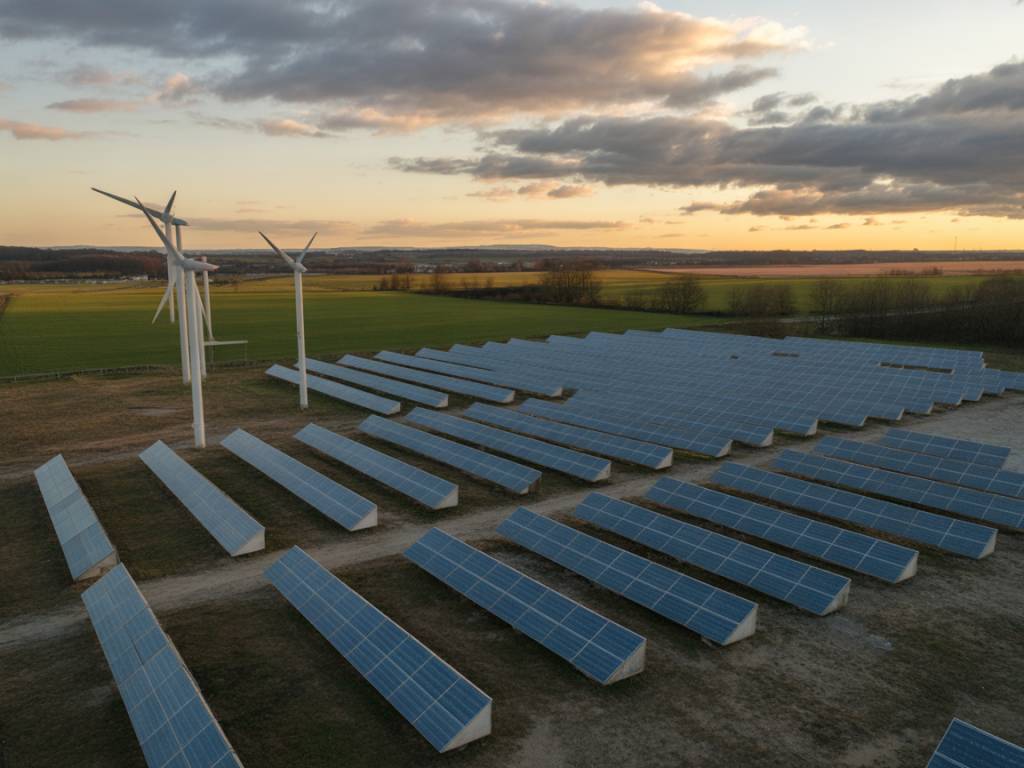
I want to show you how citizen energy cooperatives can become a very concrete tool to finance the local ecological transition, without depending on big utility companies. Instead of waiting for national programs or corporate investments, you can help create local renewable projects that belong to the community, generate stable returns, and keep value in the territory.
What a citizen energy cooperative actually is
A citizen energy cooperative is a company that is:
-
Owned by local citizens, local authorities, and sometimes small businesses
-
Democratically governed (one person = one vote, regardless of capital invested)
-
Focused on renewable energy and energy savings (solar, wind, hydro, biomass, insulation, etc.)
-
Reinvesting most profits in local projects instead of distributing large dividends
In practice, I can buy one or more cooperative shares, typically from €50 to €500 per share, and become both co-owner and co-decision-maker. The cooperative then uses this capital (plus possibly bank loans and public support) to finance concrete projects: rooftop solar, small wind turbines, district heating, energy renovation of buildings, and more.
According to REScoop.eu, the European federation of citizen energy cooperatives, more than 1,900 cooperatives and 1.25 million citizens are already involved across Europe. In Germany, citizen or community energy has historically represented around 30–40% of renewable capacity in some regions, showing that this model can scale beyond a niche.
Why use a cooperative instead of a big energy company?
I see at least five strong reasons to use a cooperative model if I want to finance the local ecological transition.
-
Local control: The project is decided locally, by the members. If I live in the area, I can attend the general assembly and vote on investments, pricing policies, and priorities.
-
Value stays in the community: The money generated by the project (selling electricity, providing services…) is mostly reinvested in the territory: new projects, local jobs, education, solidarity funds.
-
Social acceptability: People are much more likely to support a wind turbine or solar farm if they co-own it and see the benefits directly. Studies from Denmark and Germany show higher acceptance rates for community-owned wind projects compared to purely commercial ones.
-
Long-term vision: A cooperative is not under pressure to deliver short-term returns to distant shareholders. It can prioritize environmental and social criteria, and accept slightly lower but more stable returns.
-
Democratic governance: The rule “one person, one vote” prevents large investors from taking control. This is a real difference from classic companies where voting power is proportional to capital.
How a citizen energy cooperative works in practice
Most cooperatives follow a similar structure. If I want to understand how they operate, I can look at four key elements: governance, financing, technical aspects, and use of profits.
Governance
-
Members buy shares and become co-owners.
-
A board of directors is elected by the general assembly of members.
-
Strategic decisions (new projects, profit allocation, major investments) are voted on in the general assembly.
Financing
-
Equity from members (cooperative shares).
-
Bank loans dedicated to renewable energy.
-
Sometimes grants or low-interest loans from local authorities or national programs.
-
Occasionally crowdfunding campaigns or bond issues targeted at local citizens.
Technical aspects
-
The cooperative can hire an energy engineer, project manager, and administrative staff.
-
It can also outsource construction and maintenance to specialized companies, while keeping ownership and long-term control.
-
It negotiates connection to the grid, power purchase agreements, and insurance.
Use of profits
-
Reinvestment in new projects (for instance, additional solar rooftops).
-
Small, stable dividends for members (often between 2% and 6% per year, depending on the country and risk profile).
-
Reserves for maintenance and future investments.
-
Sometimes social or environmental funds dedicated to low-income households, energy education, or biodiversity measures.
Practical examples and case studies
To make this more concrete, I want to share a few typical models that already exist in many regions.
Example 1: A rooftop solar cooperative on public buildings
A municipality has several large roofs: schools, sports halls, administrative buildings. Instead of signing a long-term contract with a big energy company, residents and the municipality create a cooperative.
-
Citizens buy shares starting at €100.
-
The municipality provides roof access via a long-term lease (for example, 20–25 years).
-
The cooperative installs solar panels, financed partly by member equity and partly by a bank loan.
-
The electricity produced is sold either to the grid or directly to the municipality under a power purchase agreement (PPA) at an agreed price.
-
Profits are used to pay back the loan, maintain the installation, and fund new projects.
This model exists in many European cities. For instance, in Belgium and the Netherlands, dozens of cooperatives have installed solar panels on school roofs with citizen financing, often reaching internal rates of return between 3% and 6% for members over the life of the project.
Example 2: A community wind turbine
In rural areas with good wind resources, cooperatives often invest in one or several wind turbines:
-
Local residents, farmers, and small businesses become members of the cooperative.
-
The cooperative develops the project (permits, environmental studies, grid connection).
-
Construction is carried out by a specialized company, but the ownership remains with the cooperative.
-
The electricity is sold on the wholesale market or through long-term contracts.
-
Profits are redistributed to members and used to support local projects (for example, insulation subsidies or electric mobility).
In Denmark and Germany, this kind of community wind has played a key role in accelerating renewable deployment. In some regions of Germany, more than half of wind capacity is owned by citizens or farmers, not by large corporations.
Example 3: An energy efficiency and renovation cooperative
Some cooperatives go beyond production and focus on energy savings:
-
They offer audits, advice, and group purchasing schemes for insulation, heat pumps, or efficient appliances.
-
They pre-finance part of the renovation and are repaid through the energy savings over several years.
-
They may partner with local authorities to target low-income households and fight energy poverty.
This model is emerging in several countries where building renovation is a major climate priority. It directly reduces energy consumption and bills while improving comfort.
Key financial and legal points I need to understand
Even if I am not a financial expert, I need to understand a few essential elements before investing in or creating a cooperative.
Expected returns and risks
-
Returns are generally modest but relatively stable: often in the 2–6% range per year for mature projects.
-
Projects are long term (15–25 years for solar and wind).
-
Risks include technical failure, regulatory changes (tariffs, subsidies), and electricity price volatility.
-
To manage risk, cooperatives often diversify projects and build strong reserves.
Legal structure
-
Many countries have specific legal forms for cooperatives or social enterprises (for example, “SCIC”, “cooperative company”, “bencom”, etc.).
-
The key is to ensure democratic governance and limited profit distribution, to keep the mission aligned with the ecological transition.
-
Statutes should clearly define voting rights, capital transfer, and profit allocation.
Regulation and grid access
-
Energy laws determine how cooperatives can sell electricity (feed-in tariffs, auctions, PPAs, local energy communities).
-
In the EU, the concept of “citizen energy community” and “renewable energy community” is now recognized in legislation, which opens doors for local projects.
-
It is usually necessary to work with lawyers or experienced organizations to navigate permits, grid access, and contracts.
Concrete steps to get involved or start a cooperative
If I want to use citizen energy cooperatives to finance the ecological transition in my area, I can follow a step-by-step approach.
Step 1: Map existing initiatives
-
I start by checking whether a cooperative or community energy project already exists near me.
-
I can search national networks, the REScoop.eu map, or ask local NGOs and municipal services.
-
If a cooperative already exists, the fastest way to act is often to become a member and invest in their next project.
Step 2: Build a core group
-
If there is no initiative yet, I identify 5–15 motivated people: neighbors, local entrepreneurs, municipal staff, teachers, farmers.
-
We clarify our motivation: is it mainly climate action, local autonomy, energy poverty, or all of these?
-
We share skills: technical, legal, financial, communication, community organizing.
Step 3: Choose a first pilot project
-
I recommend starting small and visible: for example, a solar rooftop on a school, a community center, or a farm building.
-
We estimate cost, potential production, and revenues with simple tools or help from an engineer.
-
We talk early with the building owner and the local grid operator.
Step 4: Define the legal and financial model
-
We choose an appropriate cooperative legal form, often with support from a national network.
-
We draft statutes including democratic principles and profit allocation rules.
-
We design the financing plan: member equity, bank loan, possible public support.
Step 5: Mobilize local citizens and stakeholders
-
We organize public meetings, presentations in schools, local media coverage.
-
We explain clearly the financial aspects (risks, returns, time horizon) in accessible language.
-
We invite people to become founding members and subscribe to shares.
Step 6: Implement, monitor, and replicate
-
Once the first project is built, we communicate its results: production, CO₂ avoided, number of members, local benefits.
-
We improve governance and processes based on feedback.
-
We prepare a pipeline of new projects: more rooftops, maybe wind or efficiency programs.
Actionable recommendations for getting started now
To finish, I want to highlight a few direct actions I can take if I am serious about using citizen energy cooperatives to finance the local ecological transition without big corporations:
-
Invest in an existing cooperative: I look for a cooperative near me and buy at least one share. Even a small amount makes me part of the movement and gives me experience with the model.
-
Propose a roof or site: If I own or manage a building, I offer the roof to a cooperative as a potential solar site. This is often the most limiting factor.
-
Contact my municipality: I ask local elected officials if they are willing to partner with citizens for solar or wind projects rather than signing with large companies only.
-
Join a national or regional network: Many countries have platforms that provide legal templates, financial tools, and training for new cooperatives. I do not need to start from zero.
-
Develop my skills: I learn the basics of energy economics, regulation, and cooperative governance through webinars, guides, and local workshops.
-
Start a discussion group: Even a simple monthly meeting with a few interested people can be the seed of a future cooperative.
By taking these steps, I can help build a local energy system that is more resilient, more democratic, and more aligned with the ecological transition, while reducing dependence on large corporate actors. Citizen energy cooperatives are not a theoretical idea; they are a proven tool that I can adapt and activate in my own community.